COMEN AGSS-H and AGSS-L Anaesthetic Gas Scavenging System
Share

COMEN AGSS-H and AGSS-L Anaesthetic Gas Scavenging System
COMEN AGSS-H and AGSS-L anaesthetic gas scavenging systems for compatible hospital exhaust ducts, with model selection based on the stated exhaust-pipe flow rate.
Product introduction
The COMEN AGSS-H and AGSS-L are anaesthetic gas scavenging systems designed to work with hospital anaesthetic gas exhaust pipes. Select the model according to the stated exhaust-pipe flow rate and confirm the duct arrangement and anaesthesia-machine connection before installation.
Key features
Two flow-based models
AGSS-H is specified for exhaust-pipe flow rates above 75 L/min. AGSS-L is specified for rates below 50 L/min.
Duct compatibility
The manufacturer lists jet AGS ducts, negative-pressure AGS ducts and negative-pressure exhaust ducts.
Physical scavenging
The source describes physical gas absorption without a separate gas supply, power supply or chemical consumables.
Machine connection options
The manufacturer describes connection solutions for major anaesthesia-machine brands. Exact model and connector compatibility require confirmation.
Operating principle and waste-gas collection
Waste anaesthetic gas is described as overflow emitted by an anaesthesia machine at the end of expiration. It is discharged intermittently and includes exhaled gas and driving gas. The source identifies N2O, sevoflurane and isoflurane among gases that may be present, and notes waste-gas discharge from semi-closed breathing circuits.
COMEN AGSS works with hospital exhaust pipes to remove anaesthetic waste gases. The manufacturer states that its design helps reduce breathing-circuit ventilation abnormalities associated with negative pressure in exhaust ducts.
The source describes physical gas absorption without a separate gas or power supply and without chemical consumables. A compatible hospital exhaust arrangement is still required.
Model comparison
| Specification | AGSS-H | AGSS-L |
|---|---|---|
| Exhaust-pipe flow rate | > 75 L/min | < 50 L/min |
| Operating method | Physical gas absorption | Physical gas absorption |
| Separate gas or power supply | Not required, according to the supplied source | Not required, according to the supplied source |
| Chemical consumables | Not required, according to the supplied source | Not required, according to the supplied source |
| Installation interface | Compatible hospital anaesthetic gas exhaust pipes | Compatible hospital anaesthetic gas exhaust pipes |
The source does not specify a suitable model for exhaust-pipe flow rates from 50 to 75 L/min, including the stated boundary values. Confirm model selection for that range with the manufacturer.
Compatible ducts and anaesthesia machines
- Jet AGS ducts.
- Negative-pressure AGS ducts.
- Negative-pressure ducts for high- and low-velocity exhaust arrangements.
- Manufacturer-described connection solutions for major anaesthesia-machine brands.
The source claims suitability for almost all anaesthesia machines. Confirm the specific machine, connector and exhaust-system requirements before treating a configuration as compatible.
Commissioning and applications
The manufacturer describes a simple commissioning process and stable exhaust discharge. Installation is intended to work with compatible hospital anaesthetic gas exhaust pipes serving anaesthesia equipment.
Contact Nass Ventures to confirm the exhaust-pipe flow rate, duct type, machine connection and commissioning requirements for the intended installation.
Technical specifications
| Specification | Supplied information |
|---|---|
| Manufacturer | COMEN (Shenzhen Comen Medical Instruments Co., Ltd.) |
| Product type | Anaesthetic gas scavenging system |
| Models | AGSS-H and AGSS-L |
| AGSS-H exhaust-pipe flow | > 75 L/min |
| AGSS-L exhaust-pipe flow | < 50 L/min |
| Operating method | Physical gas absorption |
| Separate gas supply | Not required, according to the supplied source |
| Separate power supply | Not required, according to the supplied source |
| Chemical consumables | Not required, according to the supplied source |
| Exhaust interface | Hospital anaesthetic gas exhaust pipes |
| Duct types listed | Jet AGS, negative-pressure AGS and negative-pressure exhaust ducts |
| Anaesthesia-machine connections | Manufacturer-described solutions for major brands; specific compatibility to be confirmed |
Manufacturer information requiring verification
- Confirm model selection for flow rates of 50–75 L/min, including exactly 50 L/min and 75 L/min. The source supplies no selection rule for these values.
- Confirm the installed duct type, available exhaust flow, operating negative pressure and machine connection requirements.
- Confirm the scope of the statement that no gas or power supply is required, including the hospital exhaust infrastructure needed for operation.
- Confirm the exact anaesthesia-machine models and connectors supported.
The supplied page attributes mutagenicity, carcinogenicity, organ toxicity, fertility effects and psychological effects to inhaled anaesthetics, citing the Chinese Society of Anesthesiology’s “Guidance on the Management of Anesthetic Gas Leaks”. These broad statements are reproduced here as source claims requiring verification against the exact guidance and agent-specific evidence before publication. They are not presented as established effects of every anaesthetic agent.
Dimensions, weight, construction materials, supplied connectors and numerical exhaust performance are not specified in the source.
COMEN AGSS-H and AGSS-L Anaesthetic Gas Scavenging System from Nass Ventures
Contact Nass Ventures for pricing, configuration, compatible accessories, installation requirements and technical support.
Shipment
Benefit from reliable delivery options
Every day, we ship our laboratory equipment throughout Nigeria and internationally. We work with trusted and experienced logistics and courier partners to ensure safe and timely delivery. Shipping costs and delivery times depend on the items ordered and the recipient’s location. Alternatively, you may arrange to collect your order in person by appointment. Below is an overview of our shipping options and policies.
Shipping within Nigeria
All goods are insured as standard up to a value of ₦ equivalent of €25,000. Shipping costs are calculated based on the weight, dimensions, value of the shipment, and delivery destination within Nigeria. For detailed shipping information, please contact us directly—we will be happy to assist.
International shipping
For accurate international shipping costs, we require details of the specific product(s) you wish to order.
Please contact us by telephone or email for a tailored quotation.
Freight forwarding, sea or air freight
For large, heavy, or specialized equipment, we provide personalised quotations for road freight, sea freight, or air freight. Taking current logistics conditions into account, we aim to offer the best possible price-to-performance ratio.
Incoterms 2020
All shipments are handled in accordance with Incoterms® 2020 (ICC). Please contact us to confirm and agree on your preferred delivery terms.
Self-collection
If required, you may collect your goods in person by prior appointment. Please note that pricing and availability may vary between Nigeria and other countries.
Standard deliveries
Standard shipments within Nigeria are handled by reputable courier and logistics providers. Upon request, we can also arrange alternative carriers to meet specific delivery requirements.
Insurance
All deliveries are insured up to a maximum value of ₦ equivalent of €25,000. If the value of your goods exceeds this amount, we will contact you to arrange additional insurance coverage.
Delivery time
Delivery times depend on product availability and order volume. High-demand items may be subject to delays beyond our control. If you require urgent delivery, please inform us in advance, and we will do our best to accommodate your request.
Q: Saves time
A: This reason might be the most obvious, but it’s a clear benefit of an FAQ page. Not only does the FAQ page save customers time, but it also saves employees time as well. Having an FAQ page ensures customers don’t have to sit on the phone for hours waiting for simple answers, and employees don’t have to individually answer all questions.
Q: Earns trust
A: Information is available at the click of a button, but as we all know, information is not always true. Because of this, customers are more skeptical than ever before. They hunt for products by sifting through reviews, looking at the product on multiple websites, and doing price checking across the internet.
Q: Provides new insights
A: It’s difficult to get into the head of a shopper. Some buy on impulse, and others buy after thorough research. By tracking the clicks on your FAQ page, you can gather insights about your product or service that you didn’t know before. You can then inform your product team of these insights. From there, the product team can make changes to improve the product or experience.
Q: Drives internal page views
A: If you want your FAQ to be extremely thorough, which it should be, you can link to resources within your FAQ for your customers to find out more information. Whether you link to a blog that goes into more detail or a product page, this content helps the shoppers get the full story before making a purchase.
A: Prevents negative reviews
A: When looking through negative reviews, there’s almost always one thing in common: the problem could’ve been avoided.
Related Products


COMEN AX-900 Anaesthesia Workstation
COMEN AX-900 anaesthesia workstation with ascending bellows, electronic fresh-gas control, nine ventilation modes and an independent 8-inch flow-control touchscreen.
Product introduction
The COMEN AX-900 integrates an anaesthesia ventilator, respiratory monitoring functions and electronic fresh-gas control in a surgical workstation. Pneumatic components work with electronic and fluid control to support ventilation, respiratory parameter adjustment and monitoring throughout perioperative use.
Key features
Pneumatic drive and electronic control
Ascending bellows and a compact circuit support ventilation delivery and triggering during SIMV and PSV.
Perioperative ventilation
Four control modes, three SIMV modes and two pressure support modes are listed for different perioperative stages.
Closed-loop fresh-gas control
Direct oxygen-concentration setting with automatic adjustment of the oxygen-to-balance-gas ratio.
Dedicated flow-control display
An independent 8-inch LED touchscreen provides a separate fresh-gas operating area and flow information.
Ventilation technology and breathing circuit
Ascending bellows combine pneumatic drive with electronic control. The manufacturer describes a compact breathing circuit and a smaller loop cavity, with stable ventilation and responsive triggering during SIMV and PSV. It also states a higher compression capacity, without specifying a value or comparison basis.
PEEP supports clinician-directed lung protection and recruitment manoeuvres. The supplied figures are 7% ventilation accuracy and 65 ml/min leakage. These are reproduced as supplied, with no assumed ± tolerance or additional test conditions.
Perioperative ventilation modes
| Mode group | Number stated |
|---|---|
| Control ventilation | 4 |
| SIMV | 3 |
| Pressure support ventilation | 2 |
The source lists these three groups without identifying every individual mode. They are described for anaesthesia induction, maintenance, recovery and spontaneous breathing practice.
Advanced fresh-gas control system
Electronic closed-loop control allows the anaesthetist to set oxygen concentration directly. The system then adjusts the ratio of oxygen to balance gas. Real-time correction of oxygen concentration and total flow is designed to address flow errors associated with fluid inertia.
The Best Flow Indicator Tool displays the flow associated with current anaesthesia ventilation and supports consideration of low-flow anaesthesia. Its colour-spectrum diagram follows the manufacturer’s alarm-colour design to make the current flow value easier to interpret.
Control system and pressure indication
Fresh-gas control uses an independent 8-inch LED touchscreen, providing a separate operating area with detailed flow information. The source does not identify this screen as the main ventilation display.
An electronic gas-source pressure gauge provides pressure indication without a mechanical pointer. The manufacturer describes this as avoiding pointer inertia.
Product benefits and applications
- Separate fresh-gas controls provide a dedicated area for flow adjustment and observation.
- Respiratory monitoring and breathing-parameter adjustment support anaesthesia management during surgical procedures.
- Ventilation groups support induction, maintenance, recovery and spontaneous breathing practice.
- The Best Flow Indicator Tool supports fresh-gas usage assessment during low-flow anaesthesia.
Technical specifications
| Specification | Supplied information |
|---|---|
| Manufacturer | COMEN (Shenzhen Comen Medical Instruments Co., Ltd.) |
| Model | AX-900 |
| Product type | Anaesthesia workstation with integrated ventilator |
| Drive and control | Ascending bellows with pneumatic drive and electronic control |
| Ventilation mode groups | Four control ventilation modes, three SIMV modes and two pressure support ventilation modes |
| Ventilation accuracy | 7%, as stated in the supplied page; tolerance definition not provided |
| Leakage | 65 ml/min, as stated in the supplied page; test conditions not provided |
| PEEP | Supports clinician-directed lung protection and recruitment manoeuvres |
| Autoclavability | Listed as “Autoclavable”; applicable components and validated processing conditions require confirmation |
| Fresh-gas control | Electronic closed-loop control with direct oxygen-concentration setting |
| Automatic adjustment | Oxygen-to-balance-gas ratio, oxygen concentration and total-flow correction |
| Flow indicator | Best Flow Indicator Tool with colour-spectrum display |
| Dedicated flow-control screen | 8-inch LED touchscreen |
| Gas-source pressure indication | Electronic pressure gauge |
| Monitoring | Respiratory monitoring functions and breathing-parameter adjustment |
Manufacturer information requiring verification
- Confirm the definition and test conditions of the stated 7% ventilation accuracy. The source does not identify whether this is a ± tolerance.
- Confirm the pressure conditions and measurement method for the stated leakage of 65 ml/min.
- Confirm the full ventilation mode list, available settings and patient-specific operating ranges.
- Confirm which components are autoclavable, together with the validated temperature, cycle and reprocessing instructions.
- Confirm the numerical specification and comparison basis for the stated higher compression capacity.
- Confirm installed monitoring functions, standard accessories, available options and gas supply requirements.
Dimensions, weight, power requirements, main ventilation display size and construction materials are not specified in the supplied page.
Product documentation
COMEN AX-900 Anaesthesia Workstation from Nass Ventures
Contact Nass Ventures for pricing, configuration, compatible accessories, installation requirements and technical support.

COMEN AX-600 Anaesthesia Machine
COMEN AX-600 anaesthesia machine with a 12.1-inch rotating touchscreen, nine ventilation modes, modular AG, EtCO2 and BIS monitoring, and an optional central brake.
Product introduction
The COMEN AX-600 combines ascending bellows ventilation, pneumatic drive and electronic control with a rotating touchscreen and modular monitoring. Its drawer storage and optional central brake support operating-theatre organisation and use.
Key features
Four-way rotating touchscreen
The 12.1-inch touchscreen can be adjusted for clinicians working at different heights and positions.
Perioperative ventilation
Four control modes, three SIMV modes and two pressure support modes are listed.
Modular monitoring
AG, EtCO2 and BIS monitoring functions are described within a flexible, plug-and-play modular design.
Storage and braking
Roomy rotatable and lockable drawer storage is described. A central brake system is optional.
Display and control system
A 12.1-inch four-way rotating touchscreen supports observation and operation from different positions. The source presents this arrangement as accommodating different clinician heights and working preferences.
Perioperative ventilation modes
| Mode group | Number stated |
|---|---|
| Control ventilation | 4 |
| SIMV | 3 |
| Pressure support ventilation | 2 |
The source lists these three groups without identifying every individual mode. They are described for anaesthesia induction, maintenance, recovery and spontaneous breathing practice.
Modular monitoring and configuration
The modular design incorporates anaesthesia-related monitoring functions including AG, EtCO2 and BIS. The source describes plug-and-play operation, flexible configuration and resource sharing. Confirm which modules are included in the quoted configuration and which are optional.
Ventilation technology and breathing circuit
Ascending bellows combine pneumatic drive with electronic control. The manufacturer describes a compact breathing circuit and a smaller loop cavity, with stable ventilation and responsive triggering during SIMV and PSV. It also states a higher compression capacity, without specifying a value or comparison basis.
PEEP supports clinician-directed lung protection and recruitment manoeuvres. The supplied figures are 7% ventilation accuracy and 65 ml/min leakage. These are reproduced as supplied, with no assumed ± tolerance or additional test conditions.
Storage and optional central brake
The manufacturer describes a rotatable and lockable roomy drawer arrangement with extra-large storage for syringes, monitoring accessories and other operating supplies.
The central brake system is optional. It is described as supporting convenient operation and equipment positioning.
Product benefits and applications
- Adjustable touchscreen positioning supports observation and operation from different working positions.
- Modular monitoring allows the configuration to be matched to procurement requirements.
- Drawer storage keeps frequently used supplies within reach.
- Ventilation groups support anaesthesia induction, maintenance, recovery and spontaneous breathing practice.
Technical specifications
| Specification | Supplied information |
|---|---|
| Manufacturer | COMEN (Shenzhen Comen Medical Instruments Co., Ltd.) |
| Model | AX-600 |
| Product type | Anaesthesia machine |
| Display | 12.1-inch touchscreen |
| Display adjustment | Four-way rotation |
| Drive and control | Ascending bellows with pneumatic drive and electronic control |
| Ventilation mode groups | Four control ventilation modes, three SIMV modes and two pressure support ventilation modes |
| Ventilation accuracy | 7%, as stated in the supplied page; tolerance definition not provided |
| Leakage | 65 ml/min, as stated in the supplied page; test conditions not provided |
| PEEP | Supports clinician-directed lung protection and recruitment manoeuvres |
| Autoclavability | Listed as “Autoclavable”; applicable components and validated processing conditions require confirmation |
| Listed monitoring functions | AG, EtCO2 and BIS |
| Modular design | Plug-and-play, flexible configuration and resource sharing |
| Storage | Rotatable and lockable roomy drawer arrangement |
| Central brake system | Optional |
Manufacturer information requiring verification
- Confirm the definition and test conditions of the stated 7% ventilation accuracy. The source does not identify whether this is a ± tolerance.
- Confirm the pressure conditions and measurement method for the stated leakage of 65 ml/min.
- Confirm the full ventilation mode list, available settings and patient-specific operating ranges.
- Confirm which components are autoclavable, together with the validated temperature, cycle and reprocessing instructions.
- Confirm the numerical specification and comparison basis for the stated higher compression capacity.
- Confirm standard and optional monitoring modules, drawer configuration and central brake availability.
Dimensions, weight, power requirements, gas supply requirements and construction materials are not specified in the supplied page.
Product documentation
COMEN AX-600 Anaesthesia Machine from Nass Ventures
Contact Nass Ventures for pricing, configuration, compatible accessories, installation requirements and technical support.


COMEN X8 Anaesthesia Machine
COMEN X8 anaesthesia workstation with electronic fresh-gas control, nine ventilation modes, an 18.5-inch touchscreen, integrated modules and perioperative management tools.
The COMEN X8 brings fresh-gas delivery, ventilation support, monitoring modules and anaesthesia management functions together in an integrated workstation. Its electronic flowmeter and econometer support fresh-gas control and low-flow anaesthesia, while its ventilation modes and lung protection tools support management throughout the perioperative process.
Key features
Electronic fresh-gas control
Directly set FiO2 and total flow using the electronic flowmeter. The econometer provides real-time fresh-gas usage information to guide low-flow anaesthesia and help limit unnecessary anaesthetic agent waste.
Ventilation support
Nine listed modes cover mechanical, adaptive, synchronised and support ventilation: VCV, PCV, PSV/CPAP, SIMV-VC, SIMV-PC, SIMV-PRVC, PRVC, AMV and APRV.
Touchscreen interface
An 18.5-inch capacitive touchscreen displays multiple parameters on one screen. The manufacturer describes 360-degree rotation to accommodate different clinician positions and working preferences.
Perioperative management
High-flow oxygen therapy, lung recruitment tools, respiratory monitoring functions and data interconnection support a continuous perioperative workflow.
Gas delivery and operating principles
The electronic flowmeter allows anaesthetists to set the inspired oxygen fraction (FiO2) and total fresh-gas flow directly. The econometer displays fresh-gas usage information during operation to support low-flow anaesthesia management.
The supplied manufacturer page lists breathing-circuit leakage of 49.5 ml, ventilation deviation of 7% and a sampling-response figure of 1,000 Hz. These figures are reproduced without changing their stated meaning. Their definitions and test conditions require manufacturer confirmation, as detailed below.
Ventilation modes
The manufacturer describes the X8 as providing ICU-level ventilation support for perioperative use, with mechanical, adaptive, synchronised and support ventilation options.
| Function | Manufacturer information |
|---|---|
| Listed ventilation modes | VCV, PCV, PSV/CPAP, SIMV-VC, SIMV-PC, SIMV-PRVC, PRVC, AMV, APRV |
| Adaptive Minute Ventilation (AMV) | Listed as a supported ventilation mode. The explanatory paragraph supplied under this heading requires verification. |
| Airway Pressure Release Ventilation (APRV) | Uses sustained airway pressure with short pressure-release periods. The manufacturer describes this mode in relation to the open-lung principle and preservation of spontaneous breathing. |
Integrated modules and breathing circuit
The manufacturer lists the following modules and systems. Confirm the supplied configuration and module availability when requesting a quotation.
Built-in AGSS
Active anaesthetic waste-gas absorption.
Modular breathing circuit
An integrated modular design supports maintenance and disinfection.
BIS module
Provides an anaesthesia depth indication for intraoperative management.
Negative pressure suction
A dedicated suction system provides airway assistance for anaesthetists.
High-flow oxygen therapy and lung protection tools
The X8 offers continuous high-flow, high-concentration oxygen delivery for perioperative oxygen support. Its lung protection functions provide tools for clinician-directed respiratory management.
- Lung recruitment tools based on the PEEP increment method.
- Oesophageal pressure monitoring.
- Sigh ventilation.
- Inspiratory hold and expiratory hold.
- A VT/IBW tool for ideal tidal volume calculation and guidance on low tidal volume settings.
- Spontaneous breathing modes for use across perioperative stages.
Control system and anaesthesia management
- Soda lime tank in-place reminders support operational checks and management of leakage risks.
- Anaesthesia data review and printing support record archiving and post-case traceability.
- Quick startup and rapid self-tests support preparation for emergency use.
- Visual self-checking procedures guide operators through system checks.
- Gas usage monitoring and anaesthesia consumption warnings support resource management.
Data interconnection and applications
Connection to a data platform through integration equipment supports continuous perioperative data interconnection. The manufacturer describes workflows covering emergency surgery, elective surgery, painless surgery and day surgery.
Confirm the required integration equipment, platform compatibility and local implementation requirements with Nass Ventures before specifying a connected installation.
Technical specifications and product information
| Specification | Supplied information |
|---|---|
| Manufacturer | COMEN (Shenzhen Comen Medical Instruments Co., Ltd.) |
| Model | X8 |
| Product type | Integrated anaesthesia machine |
| Display | 18.5-inch capacitive touchscreen with multi-parameter display |
| Rotation | 360 degrees, as stated by the manufacturer |
| Fresh-gas control | Electronic flowmeter with direct FiO2 and total-flow setting |
| Fresh-gas usage guidance | Real-time econometer |
| Breathing-circuit leakage | 49.5 ml, as supplied; measurement conditions not stated |
| Ventilation deviation | 7%, as supplied; tolerance definition not stated |
| Sampling response | 1,000 Hz, as supplied; measurement definition not stated |
| Ventilation modes | VCV, PCV, PSV/CPAP, SIMV-VC, SIMV-PC, SIMV-PRVC, PRVC, AMV, APRV |
| Listed modules and systems | Built-in AGSS, modular breathing circuit, BIS module and negative pressure suction system |
| Oxygen therapy | Continuous high-flow, high-concentration oxygen delivery |
| Lung recruitment method | PEEP increment method |
| Additional respiratory tools | Oesophageal pressure monitoring, sigh ventilation, inspiratory hold, expiratory hold and VT/IBW tool |
| Data functions | Data review, printing and platform interconnection through integration equipment |
| Operational checks | Soda lime tank reminders, rapid self-tests, visual self-checking and consumption warnings |
Manufacturer information requiring verification
- Confirm the leakage measurement basis for 49.5 ml, including any applicable time interval and pressure conditions.
- Confirm the definition and test conditions for 7% ventilation deviation and the meaning of the 1,000 Hz sampling-response figure.
- Confirm which assembly provides the stated 360-degree rotation.
- The supplied AMV section contains an apparently unrelated control-system paragraph. It reads: “The override control panel and hand remote are on standby. The override control panel enables all movements in case of hand remote failure. The wall panel and remote control are optional.” This wording requires manufacturer verification and is not presented here as a confirmed X8 control-system specification.
- Confirm standard and optional modules, accessories and integration equipment for the selected configuration.
Dimensions, weight, power requirements, gas supply requirements and construction materials are not specified in the supplied product page.
Product documentation
Manufacturer product safety and performance information for the X5/X6/X7/X8 family
COMEN X8 from Nass Ventures
The X8 combines fresh-gas control, ventilation modes, an integrated touchscreen interface and perioperative management functions in one anaesthesia workstation.
Contact Nass Ventures for pricing, configuration, compatible accessories, installation requirements and technical support.


Where it is used:
- Perinatal centers Maternity hospitals
- General therapy Intensive care Pain management Emergency care
- Operating room
- Dentistry
- General surgery Spinal surgery Cardiovascular surgery MIS
- Spinal surgery Vascular surgery Maxillofacial surgery Neurosurgery
- Hospital inpatient Clinical diagnostics Medical laboratories
- Anesthesiology
- Pediatrics
- Cardiology
Key automated functions
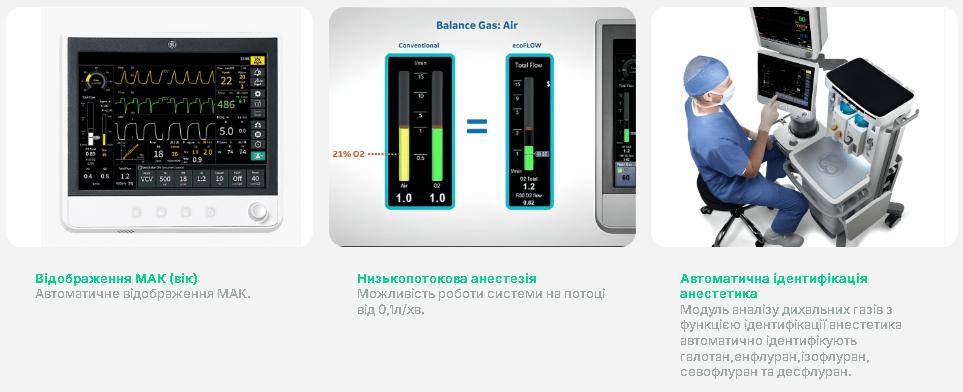
Special Features
Compatible with GE Healthcare patient monitors
The device is equipped with a special mount for B1x5 series patient monitors, allowing for increased patient monitoring.
Cardiac ByPass
Possibility of operation in ventilation mode for patients on artificial circulation apparatus.
Autonomous mode
The device operates for 90 minutes with a fully charged battery.
Carestation 600 Series Anesthesia Machine Carestation
600
Series Anesthesia Machines The Carestation 600 Series anesthesia machines utilize electronic flow control valve ventilation technology, which enables volume-limited ventilation with tidal volume compensation and electronic PEEP.
This technology also supports additional ventilation modes: pressure limitation, pressure support ventilation with apnea backup (PSVPro™), synchronized intermittent mechanical ventilation (SIMV), pressure-limited ventilation with tidal volume guarantee (PCV-VG), continuous positive airway pressure with pressure support ventilation (CPAP + PSV) and the option of artificial circulation in VCV mode.
In volume-limited ventilation mode, patients can be ventilated using a minimum tidal volume of 20 ml. Pressure-limited ventilation modes allow volume measurements as small as 5 ml.
Wide range of applications
These additional features allow ventilation to be provided to a wide range of patients.
Specifications:
- Screen size - 15 inches
- Touch screen - Yes
- Patient type - Adults, children, newborns
- Fan type - Pneumatic drive
- Ventilation modes
- VCV – volume-limited ventilation.
- PCV – pressure limited ventilation.
- PCV-VG – pressure-limited ventilation – with guaranteed tidal volume.
- SIMV VCV - synchronized intermittent forced ventilation - ventilation with volume limitation.
- SIMV PCV - synchronized intermittent mandatory ventilation - pressure-limited ventilation.
- PSVPro – pressure support ventilation with backup mode in case of apnea.
- Manual ventilation – available.
- SIMV-PCV VG – synchronized intermittent forced ventilation – pressure-limited ventilation with guaranteed tidal volume (optional).
- CPAP+PSV – continuous positive airway pressure with pressure support + pressure support ventilation (optional).


Where it is used:
- Perinatal centers Maternity hospitals
- General therapy Intensive care Pain management Emergency care
- Operating room
- Dentistry
- General surgery Spinal surgery Cardiovascular surgery MIS
- Spinal surgery Vascular surgery Maxillofacial surgery Neurosurgery
- Hospital inpatient Clinical diagnostics Medical laboratories
- Anesthesiology
- Cardiology
Key automated functions
Accessibility features
Compatible with GE Healthcare patient monitors
The device is equipped with a special mount for patient monitors of the B1x5, 650 series, allowing Canvas to increase control over the patient.
Cardiac ByPass
Possibility of operation in ventilation mode for patients on artificial circulation apparatus.
Autonomous mode
The device operates for 90 minutes with a fully charged battery.
Auxiliary sockets
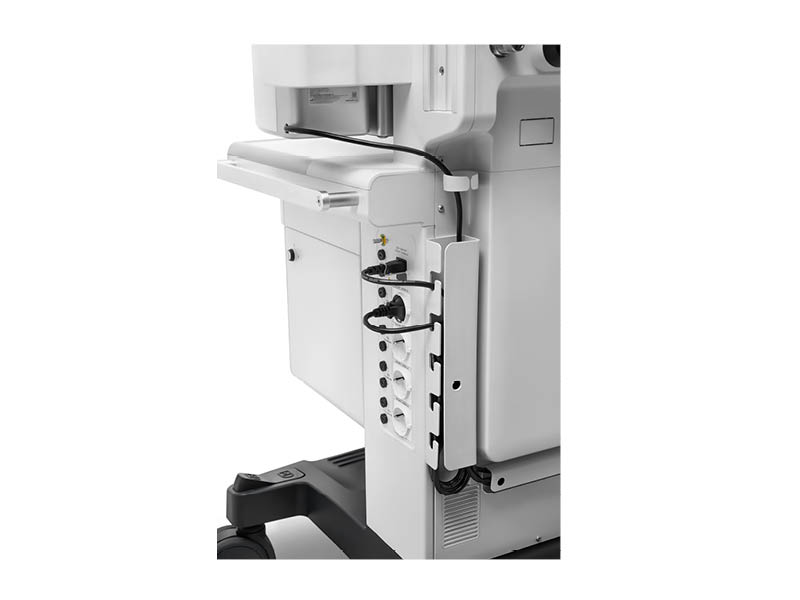
Built-in additional power outlets for greater mobility and versatility.
Connecting the gas analysis module
The E-sCAio gas analysis module automatically recognizes O2, CO2, halothane, enflurane, isoflurane, sevoflurane, and desflurane.
Carestation 750 Anesthesia and Respiratory System
Alveolar Mobilization Maneuver
This anesthesia system is equipped with an alveolar mobilization maneuver, a function for performing an automatic alveolar mobilization maneuver in one or more steps.
Electronic valve ventilation technology
This inhalation anesthesia system uses electronic flow control valve ventilation technology to provide volume-limited ventilation with tidal volume compensation and electronic PEEP.
This technology also supports pressure-limited ventilation, supplemental pressure support ventilation with apnea backup (PSVPro™) for use in spontaneously breathing patients, synchronized intermittent mandatory ventilation (SIMV) modes, pressure-mandatory ventilation with guaranteed volume (PCV-VG), continuous positive airway pressure + pressure support ventilation (CPAP+PSV), and ventilator-lung function in VCV mode.
In volume-limited ventilation mode, the patient can be ventilated using a minimum tidal volume of 20 ml.
Technical specifications:
- Screen size - 15 inches
- Touch screen - Yes
- Patient type - Adults, children, newborns
- Fan type - Pneumatic drive
- Ventilation modes
- VCV - volume-limited ventilation
- PCV - pressure-limited ventilation
- PCV-VG - pressure-limited ventilation with guaranteed tidal volume.
- SIMV VCV - synchronized intermittent forced ventilation - ventilation with volume limitation.
- SIMV PCV – synchronized intermittent mandatory ventilation – pressure-limited ventilation. PSVPro – pressure support ventilation with a backup mode in case of apnea.
- Manual ventilation - SIMV-PCV VG - synchronized intermittent forced ventilation - pressure-limited ventilation with guaranteed tidal volume (optional)
- CPAP+PSV - continuous positive airway pressure with pressure support + pressure support ventilation (optional.

More Precise
- High Flow Nasal Cannula (HFNC) to extend the safe apnoeic oxygenation time during induction
- Digital Gas Mixer makes fresh gas flow settings easier and more precise
- Smart Ventilator with a full range of ICU grade ventilation modes
- Two optional maneuvers and multiple information to evaluate Lung Recruitment effectiveness
More Cost-Effective
Optimiser and AA Measurement
The low flow Optimiser provides real-time guidance for cost-effective optimisation of the fresh gas flow, and thus the anesthetic agent. The AA Measurement enables you to monitor real-time anesthetic agent consumption and keep costs in mind.
AA Prediction
More Visible
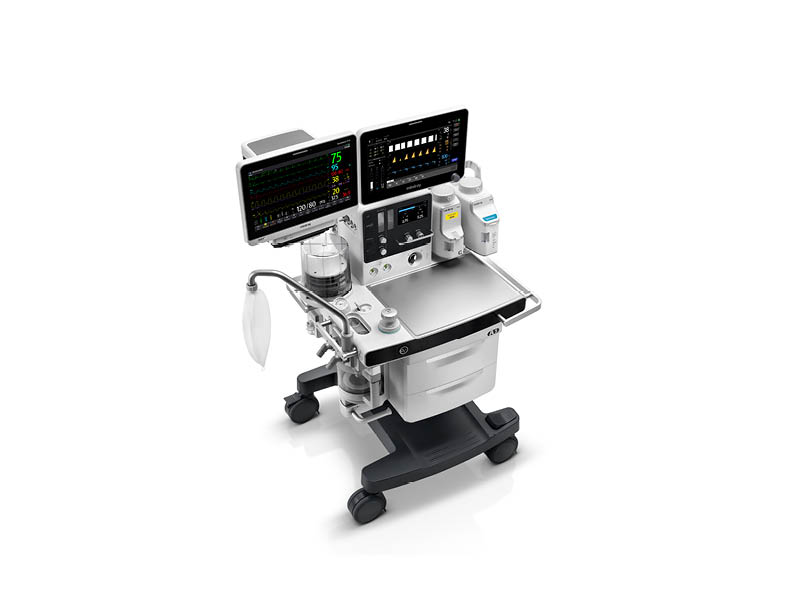
With a 15-inch high-resolution display and intuitive touch user interface, the WATO EX-65 Pro makes the anesthesia process more visible.
 |
 |
| 15-inch Capacitive Touch-screen | Visual System Check and Smart Alarm |

Integrated Solution, Together and Stronger
AnaeSight™
AnaeSight is an integrated solution for combined intravenous-inhalational anaesthesia that connects anaesthesia machines, patient monitors, and pumps. This brings greater convenience to operations and more confident decision-making, significantly improving the safety and efficiency of anaesthesia.
- Centralised control: Anaesthesiologists can remotely control the pumps through the anaesthesia machine, adjusting intravenous and inhalational anaesthetics on the same interface
- Combined drug effect: AnaeSight features the innovative eMAC™ indicator, based on published pharmacokinetics and pharmacodynamics models, assisting with the administration of anaesthetic drug
- Integrated assessment: multi-parameter assessment of anaesthesia status can be displayed on the same window
 |
 |
|
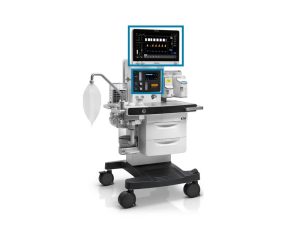
A7
Screen size : 18.5 inch Electronic flow meter (digital mixer) |
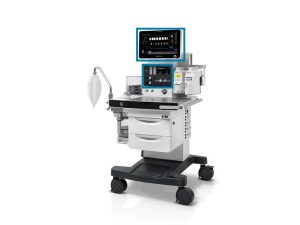
A5
Screen size : 15.6 inch Mechanical flow meter (digital display) |
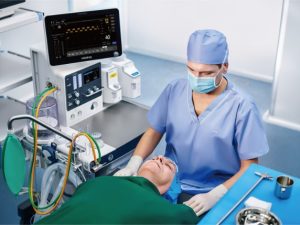
Integrated ventilation tech for tubeless anaesthesia
 |
 |
| Discover the extended safe apnoeic oxygenation benefits of high-flow nasal cannula (HFNC) oxygen, particularly beneficial for patients with challenges like poor oxygen saturation, including bariatric, paediatric, critically ill, or difficult airway cases. | Explore the benefits of jet ventilation in shared airway surgeries and challenging airway scenarios. Enhance patient safety by ensuring continuous oxygenation for a clearer surgical field. |
 |
 |
More Flexible, More Reliable
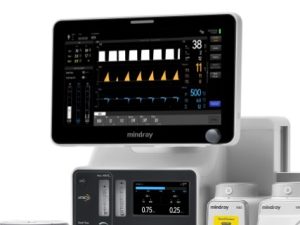
- Screen size: A7 – 18.5″, A5 – 15.6″
- Capacity touch screen with 1920*1080 HD
- Rotatable (360°) and tiltable (60°) for better angle of view
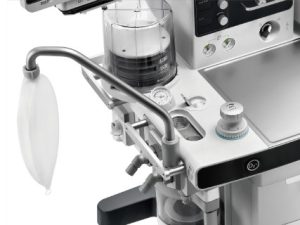
- Integrated breathing system to reduce condensation to a minimum by the heating system
- Modular and flexible design to meet the different requirements inside and outside the operating room
- Optional CO2, AG, BIS modules
|
|
|
What’s more:
- Brand new hardware design – small footprint, larger workspace
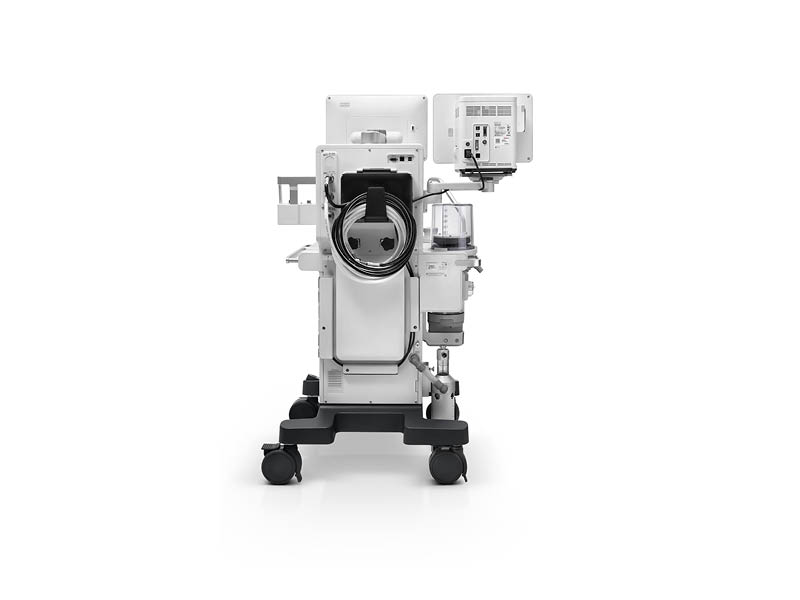
- Neat cable management to avoid clutter
- Scalable with other devices, compatible with the Mindray modular patient monitor to reduce the cost